
Burning Man Has “Lost Its Soul”, Says Co-Founder John Law
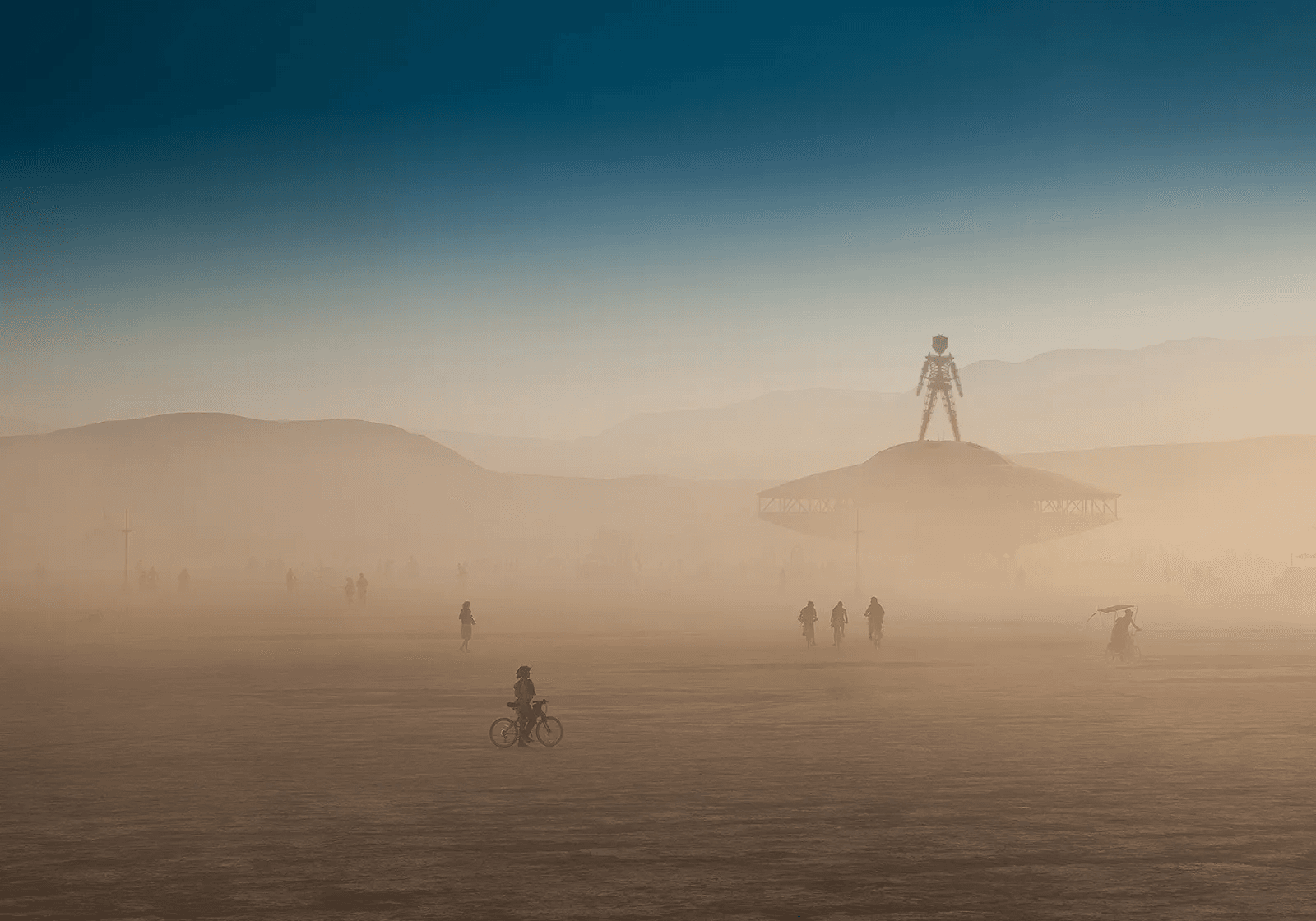
Burning Man co-founder John Law has criticised what the legendary Nevada desert gathering has become, arguing that the modern festival is almost unrecognisable from the countercultural experiment that helped shape its early years.
Writing in an essay published by the San Francisco Standard on 29th August 2026, Law reflected on Burning Man’s transformation from a radical gathering of artists and outsiders into a major international event attracting tens of thousands of people to Nevada’s Black Rock Desert.
According to Law, the festival has gradually moved away from its anarchist and anti-commercial origins, becoming an increasingly polished experience that caters to wealthy attendees and the creative industries surrounding them. From counterculture to global phenomenon John Law became involved with Burning Man in 1990, during the period when the event began developing into the desert gathering known today.
Its early identity was strongly connected to San Francisco’s underground culture and groups including the Cacophony Society and Suicide Club, communities known for experimental art, unconventional performances and anti-authoritarian ideas. Burning Man was initially far removed from the massive temporary city now constructed every year in the Nevada desert.
Early participants arrived with minimal infrastructure, sleeping directly on the desert floor and creating an environment built around experimentation, participation and unpredictability. Law, who has not attended Burning Man since 1996, said the festival that exists today bears little resemblance to that original experience.
He described its current form as an immersive spectacle increasingly designed for affluent visitors, arguing that the event has become a kind of luxury escape while continuing to present itself as a radical artistic experiment. Luxury camps and private services at Burning Man One of Law’s main criticisms concerns the growing presence of high-end services inside and around Burning Man.
The festival has become associated with elaborate camps offering levels of comfort that contrast sharply with its traditionally self-reliant philosophy. Private chefs, luxury accommodation, personal services and chartered flights have become part of the Burning Man ecosystem for some wealthy attendees. For Law, this development represents a fundamental shift in the culture of the gathering.
Burning Man officially promotes principles including radical self-reliance, participation, communal effort, decommodification and radical inclusion. However, critics have increasingly questioned whether those values can coexist with luxury camps and the growing financial barriers involved in attending the event.
Silicon Valley's influence on Burning Man Law also pointed to the rise of the internet and Silicon Valley as major factors behind Burning Man’s transformation. The gathering expanded dramatically during the 1990s. From only dozens of participants in its earliest desert edition, attendance had reached around 25,000 people by 1999.
At the same time, Burning Man became increasingly popular among figures from the rapidly expanding technology industry. Over the years, entrepreneurs and technology executives including Elon Musk, Sergey Brin, Larry Page, Mark Zuckerberg and Jeff Bezos have all been associated with the event.
Burning Man consequently developed a reputation as an unofficial meeting point for Silicon Valley founders, investors and creatives alongside its traditional community of artists and alternative culture participants. What began as an experimental desert expedition gradually became an internationally recognised cultural event. Has Burning Man become too commercial?
The commercialisation of Burning Man has been debated within its community for years. Despite the festival's principle of decommodification, attending the event can involve significant costs once tickets, transportation, equipment, food, accommodation and preparation are taken into account.
A tiered ticket pricing system introduced in 2025 also generated criticism among parts of the Burning Man community, particularly around accessibility and transparency. Online reactions to Law's comments suggest his criticism resonates with some longtime attendees and observers.
Some members of the Burning Man community argue that social media culture has also changed the atmosphere of the event, replacing spontaneous participation with carefully curated experiences designed for Instagram and other platforms. Others maintain that Burning Man remains a unique experiment in temporary community, art and radical participation despite its enormous growth.
Burning Man 2026 continues in Black Rock Desert The 2026 edition of Burning Man is taking place in Nevada's Black Rock Desert, with attendance expected to reach approximately 70,000 people. The festival remains one of the world's most recognisable gatherings of large-scale installation art, electronic music, experimental culture and temporary communities.
However, its growth has also brought increasing logistical and cultural challenges. Severe weather conditions, transportation problems and questions surrounding ticket prices and accessibility have become recurring subjects of discussion around the event. Burning Man has also faced serious incidents in recent editions, adding further scrutiny to the enormous temporary city established each year in the desert.
Earlier in 2026, HBO released The Man Will Burn, a four-part documentary series exploring Burning Man, its history and the culture surrounding the event. For Law, however, the central issue appears to be less about the size of Burning Man than about what its success has changed.
More than three decades after helping establish the desert gathering, his comments raise a question that has followed Burning Man throughout its transformation from underground experiment to global cultural phenomenon: